Quarterly Planning That Survives Contact With Reality
Most quarterly plans look great on paper and feel useless by week six. Here's a planning loop in Tellzm that updates itself as the quarter unfolds.
Plans don't survive contact with reality. Cadence does.
The thing nobody tells you about OKRs: the framework isn't the value, the cadence is. Setting four objectives in January doesn't help. Reviewing them every two weeks does. Here's the rhythm we run inside Tellzm.
Set fewer objectives
Three is good. Four is the maximum. Five means at least one is fake. Each objective gets 2–3 measurable key results — anything more and you're tracking activity, not outcome.
Tie objectives to projects, not the other way around
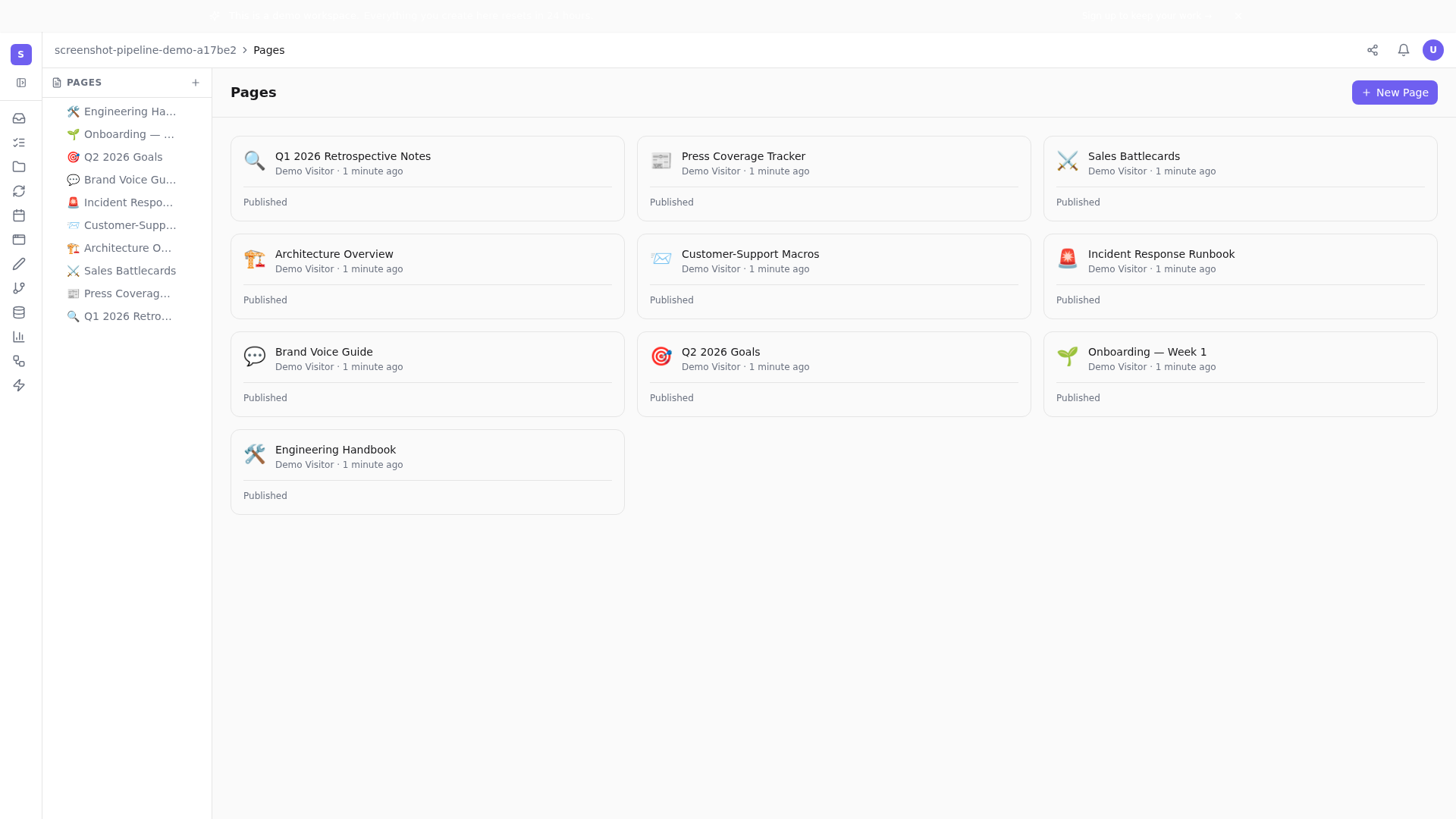
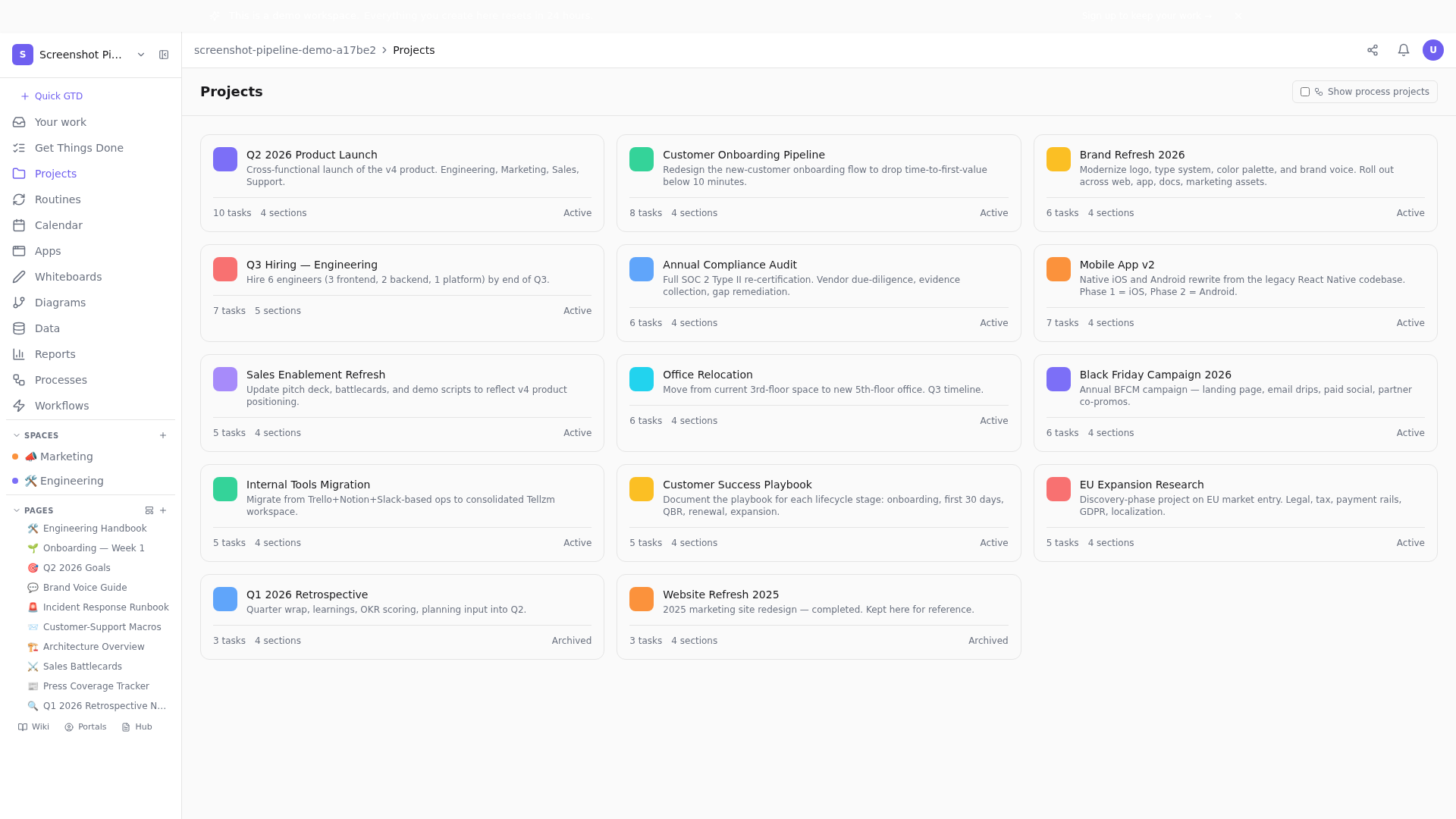
Each objective links to 1–3 projects in Tellzm. The supporting projects are the *how*; the objective is the *what for*. When a project no longer serves any objective, that's a discussion — not a defensive memo.
The 14-day check-in
- Each owner self-scores their KRs from 0.0 to 1.0. Written, not verbal.
- Anything <0.7 by mid-quarter triggers a focused review — not a slap on the wrist.
- End-of-quarter scoring happens in public — the all-hands deck includes scores.
An objective without a cadence is a wish.Browse the demo's Q2 Goals page and see four objectives wired to nine projects.
Related posts
The Complete Goal-Setting & Planning Manual
Why most plans die by week six — and the cadence that keeps them alive. A field manual on OKRs, quarterly planning, mid-quarter pivots, and the rituals that turn objectives into results.
OKR Anti-Patterns We Stopped Doing
Five things we used to do with OKRs that made them worse. If you're seeing any of these, it's not the framework — it's the practice.
The Goal-Setting Pyramid
Vision → annual → quarterly → weekly. If any layer skips, the system breaks. Here's how to keep all four in sync.
Ambitious vs. Realistic Goals — How to Set the Stretch
The right amount of stretch lands at 0.6-0.7 quarter-end. Less, you're sandbagging. More, you're losing trust.