Processes & SOPs That Actually Get Followed
The hardest part of a process isn't writing it. It's keeping it followed when nobody's watching. Here's how Tellzm makes a process the path of least resistance.
If your SOP lives in a PDF, it's dead. The best SOP is the one that runs itself.
Every team has SOP documents nobody reads. They were written in a hurry six months ago, they live in a shared drive, and the actual work happens differently. The fix isn't a longer document. The fix is to bake the process into the workflow so the workflow IS the process.
Templates instead of documents
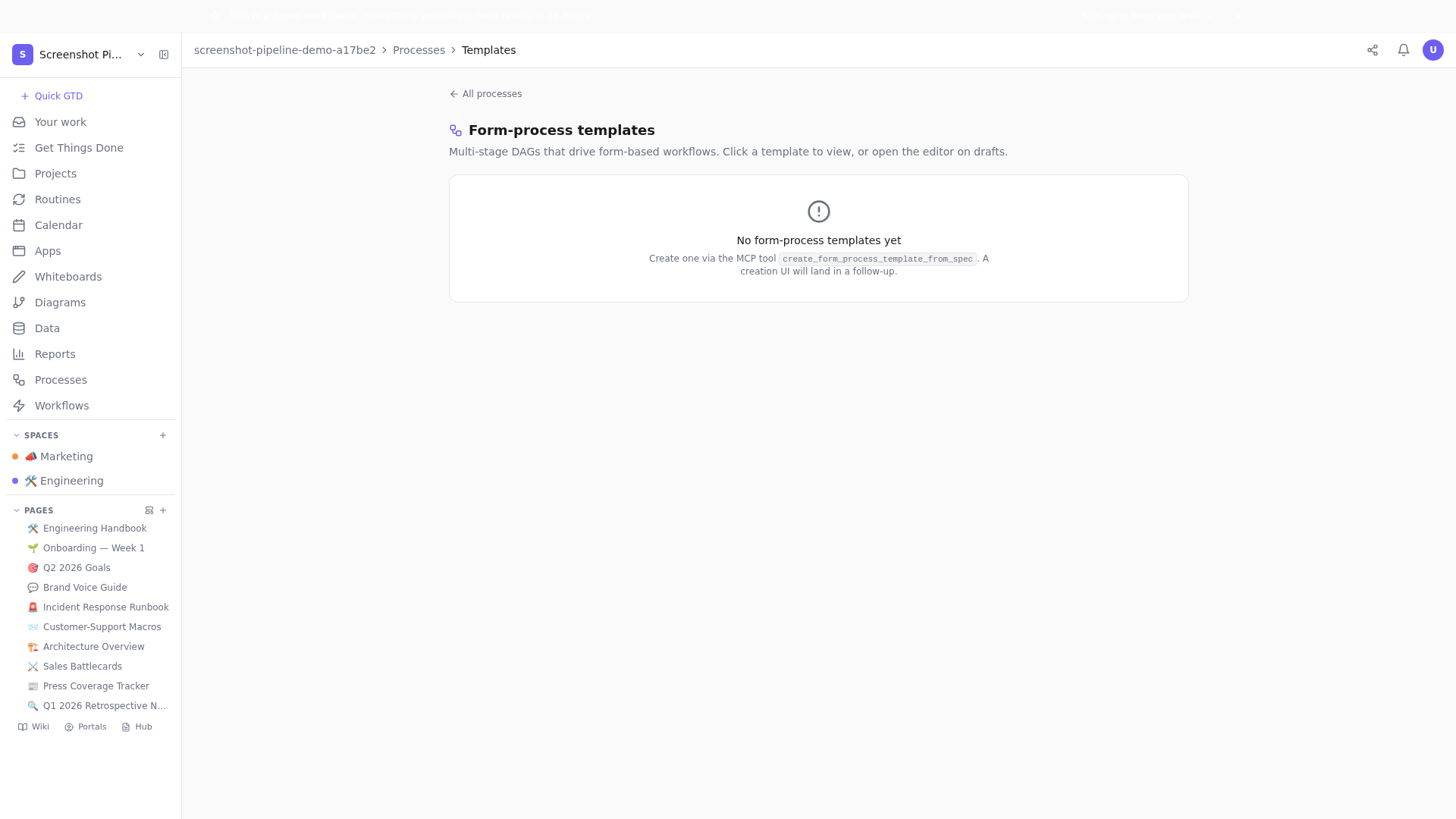
Every recurring kind of work — incident response, customer onboarding, new-hire setup — becomes a Tellzm template. The template is the SOP. When someone starts the work, they spawn an instance of the template — and the steps come with them.
Checklists with teeth
Mandatory checklist items block stage transitions. If shipping requires QA sign-off and the QA box is unchecked, the ship button is grayed out. Documentation can't enforce; the workflow can.
Living SOPs
Every SOP has an owner and a quarterly review date. Tellzm flags any SOP that hasn't been touched in 90 days — because a stale SOP is worse than no SOP at all. The owner gets a notification, makes the call: re-validate, edit, or archive.
When to write a new SOP
- When the same question gets asked three times. The third question is the SOP.
- When the same mistake gets made twice. The second mistake is the SOP.
- When a process has a checklist longer than 7 items. Document or break it up.
The best SOP isn't the longest one — it's the one your team actually follows on Tuesday at 3pm without thinking about it.Explore the demo's process template library and start a sample workflow.
Related posts
The Complete Processes & SOPs Manual
How to write SOPs that get followed, processes that survive turnover, and the operational habits that turn 'we should write that down' into 'we already did'. A field manual on templates, mandatory checklists, versioning, and the audit that keeps it all honest.
Checklists With Teeth — How to Stop Skipping the Important Steps
A checklist nobody enforces is a wish list. Here's how to make process steps blocking — so the wrong outcome is harder than the right one.
Writing an SOP That Actually Gets Read
Most SOPs are too long, too generic, and read like they were written by a lawyer. Here's how to write one your team uses.
Process Versioning — How to Update an SOP Without Breaking Active Work
Updating a live process is dangerous if you're not careful. Versioning rules + the right rollout pattern keep both old and new instances safe.