Deep Work Blocks in a Noisy Week
Two 90-minute focus blocks per day will outperform eight hours of scattered attention. Here's how to carve them out and protect them in Tellzm.
Two protected hours beat eight reactive ones. Every time.
If your week is mostly meetings, your output is mostly meeting follow-ups. Deep work doesn't happen in 15-minute gaps between calls. It happens in protected, recurring blocks that you treat as more sacred than any meeting on the calendar.
Schedule them, then defend them
- Block two 90-minute slots per day, labeled with a real task — not 'deep work'. Specificity is the lock.
- Put them on your sub-calendar, color-coded, visible to everyone. If they can see it, they won't book over it.
- Treat the block's task as the day's only commitment. If you only do it, the day was a win.
When the block gets interrupted anyway
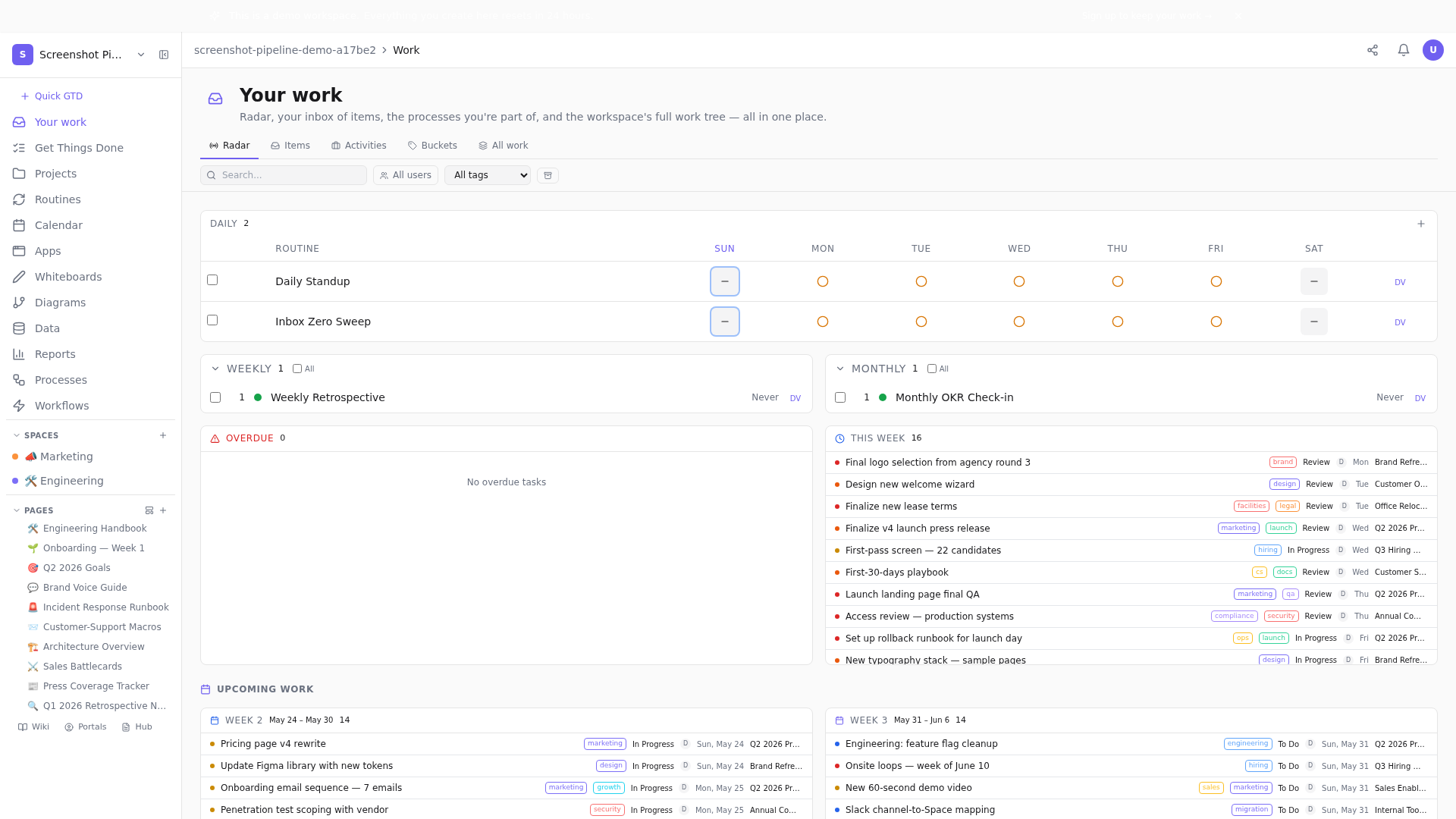
Don't reschedule. Add a routine task: 'Did I get my deep block today?'. The streak does the discipline; you don't have to.
Calendar blocks aren't a wish list. They're a contract with future-you.Open the demo calendar and see how a deep-work block looks in context.
Related posts
The Complete Personal Productivity Manual
Everything we've learned about staying productive without burning out, distilled into one long guide. Capture, plan, focus, review — with the Tellzm setup that makes each habit easy to keep.
Personal Productivity Without Burning Out
The honest version: most personal-productivity systems collapse in week three. Here's a minimal Tellzm setup that survives a year.
The Sunday-Night Weekly Plan
Fifteen minutes Sunday night save you from reactive Mondays. Here's the exact ritual.
Saying No Without Burning Bridges
The single highest-leverage productivity skill: ending a meeting request with respect intact. Here's the script.