Cycle Time: The Only Velocity Metric That Matters
Story points are gameable. Throughput depends on team size. Cycle time is honest. Here's how to track it in Tellzm and what to do when it drifts.
If you only measure one thing, measure how long work sits.
Cycle time is the wall-clock duration from when a task moves to 'in progress' to when it moves to 'done'. That's it. No story points, no T-shirt sizes, no team-velocity charts that compare against last sprint. Just: how long does work actually sit before it's done?
What good cycle time looks like
- Median under 5 days for engineering tasks; under 2 for support; under 10 for design.
- P90 (the slowest 10% of tasks) under 2× the median. If it's higher, you have outliers worth investigating.
- Trend flat or improving over the last 4 weeks. Drifting up is the leading indicator of trouble.
When cycle time spikes
- Single owner with too many in-flight tasks. Cap WIP, redistribute.
- Hidden dependency on another team — file a blocker task with that team explicitly tagged.
- Scope crept inside the task. Split it. Two smaller tasks ship faster than one big one.
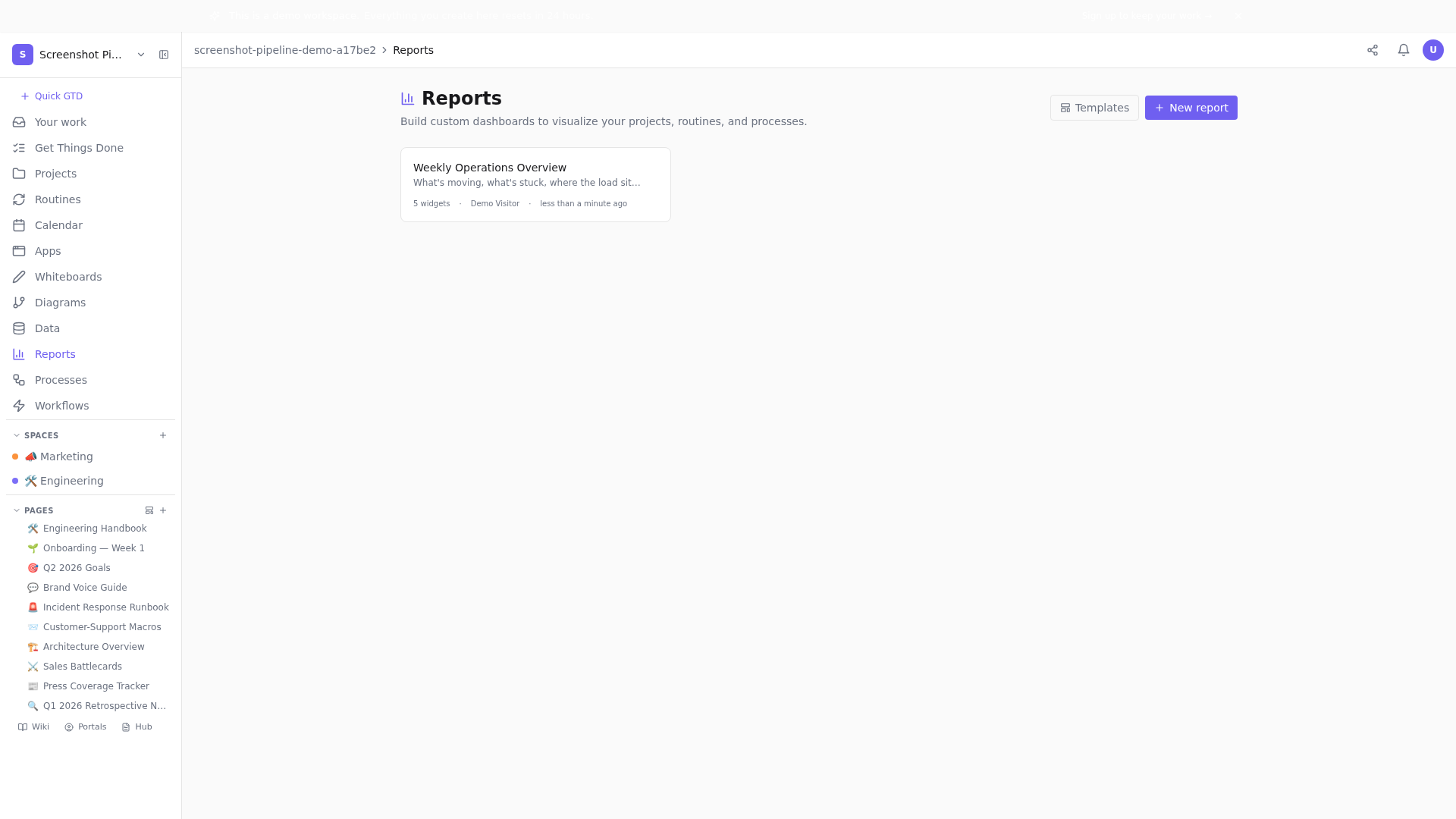
Story points measure estimates. Cycle time measures reality.See the demo dashboard with cycle-time tracked across the seeded workspace.
Related posts
The Complete Progress Tracking Manual
Stop optimizing dashboards for looking green. Start designing them to surface slippage early. A field manual on the metrics, dashboards, and weekly rituals that catch real problems before they become incidents.
Progress Tracking with Dashboards That Don't Lie
Most progress dashboards optimize for looking green. We optimize for surfacing slippage. Here's how to build dashboards in Tellzm that catch real problems early.
Leading Indicators Beat Lagging Ones — Every Time
Revenue is a lagging indicator. Churn is a lagging indicator. By the time they move, the cause was three months ago. Track leading ones instead.
The 45-Minute Weekly Business Review
Most WBRs run 90 minutes and accomplish 30 minutes of work. Here's how to cut the fat without cutting the rigor.