The Complete Team Productivity Playbook
How to move as one without becoming a meeting factory. A field manual on async-first rituals, handoffs that survive, the meetings that earn their slot, and the team culture that makes everything cheaper.
Most team rituals are calendar tax. The ones that aren't, run async.
A team that ships well has one quality the slow team doesn't: low coordination cost. They don't spend an hour aligning before they spend an hour doing. They spend ten minutes posting an update, the rest of the team reads it on their own time, and the work continues. The shape of how you communicate is the dominant input on team productivity. Get that shape right and the team feels twice as fast — even though no one is working more hours.
Part 1 — The cost of synchronous default
When a team's default is 'let's hop on a call', three hidden costs stack up. Every call requires calendar alignment, which is roughly 3-5 minutes of back-and-forth before the call even starts. Every call interrupts whoever's in a deep-work block, which costs them 20-30 minutes to refocus afterward. And every call's information is locked inside the call — no one who couldn't attend can recover it without asking someone who did. Aggregate this over a 10-person team for a month and you're paying about 80 person-hours of coordination cost. That's two full work-weeks of one engineer's salary, every month, spent on overhead.
Why teams stay synchronous-by-default
- It feels faster in the moment ('let's just talk it through') — but the moment is wrong. The compounding cost is the problem.
- Writing is harder than talking. Async-first teams have a writing culture; teams without one default to sync because writing-up-the-decision is a chore.
- Sync feels collaborative even when it's not productive. The shared-screen-emoji-reactions feeling is real, but it doesn't move the work.
Team Productivity: Async Rituals That Don't Drain Anyone
The shorter version: how to make standups, retros, and handoffs async.
Part 2 — The async standup that actually works
Daily standup is the most-discussed and most-mishandled team ritual. Done synchronously with 8 people for 25 minutes a day, it costs your team 16 hours per week. Done async, it costs each person 3 minutes of typing — and produces a written log everyone can search. Here's the exact structure that works.
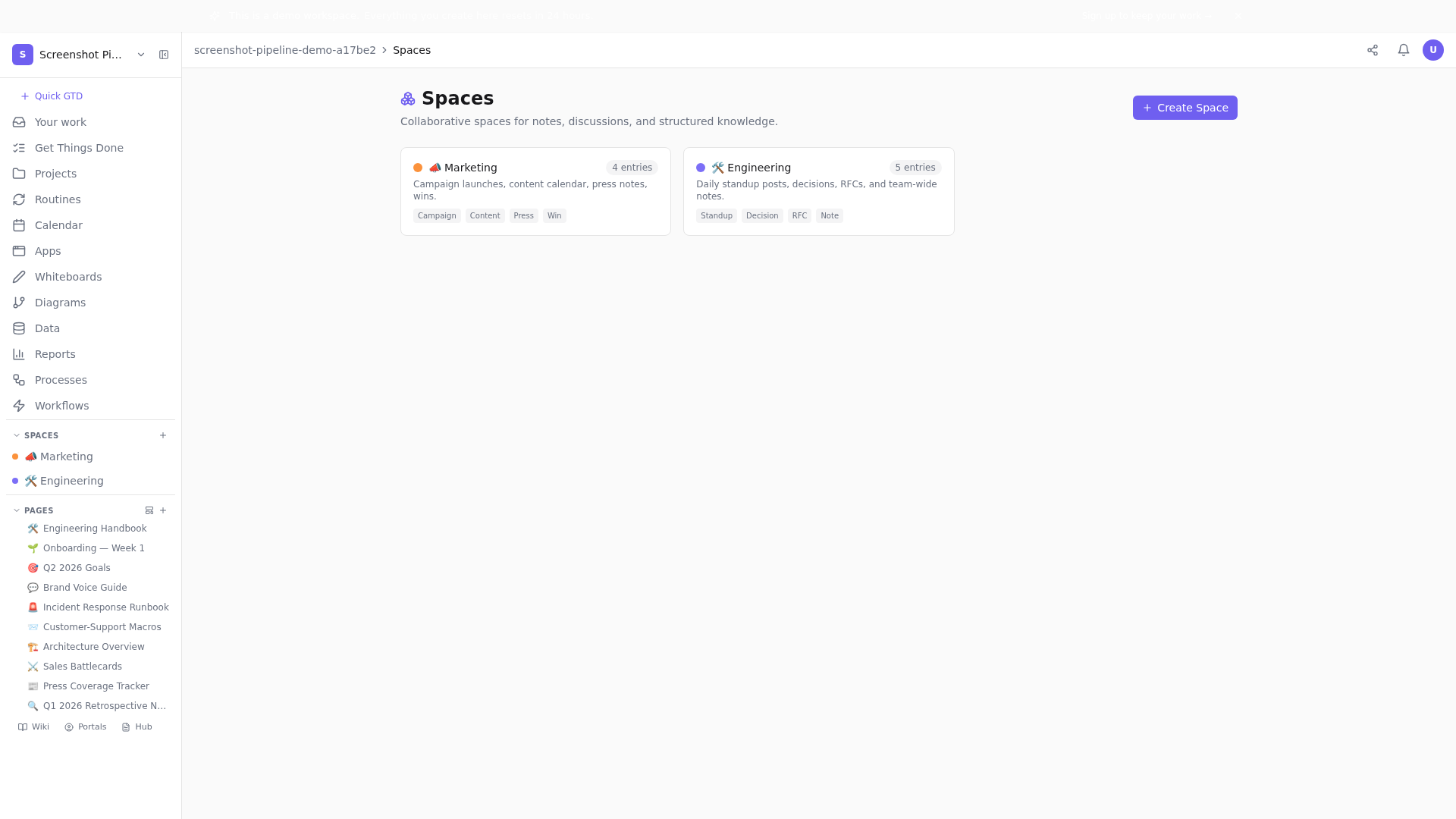
The 3-line format
- Did: one sentence on what shipped since yesterday's update.
- Doing: one sentence on the most important thing today.
- Blocked: one sentence — or 'nothing'. Blocked is the only line that triggers action.
The two rules that make it stick
Rule one: post by 10am local. Self-set deadlines die fast; team-set deadlines stick. Rule two: everyone reacts with an eye emoji on each teammate's post by end of day. This is the equivalent of nodding during a sync standup — it confirms the post was seen, without anyone needing to be in the same room. Skip rule two and the async standup becomes a wall of unread updates that nobody trusts.
Part 3 — Retrospectives without theater
Most retros are theater. The team sits in a room, posts color-coded stickies, generates a list of action items, and never looks at the list again. Three weeks later they have the same retro again. The cure is to split the retro into async writing + sync deciding.
The two-stage retro
- Stage 1 — Async (Friday → Sunday): a retro page in the team Space. Each person adds 1-3 items under 'went well', 'didn't go well', 'will try'. Over the weekend, on their own time.
- Stage 2 — Sync (Monday, 30 minutes): vote on the top 3 items in each column. For each top item, agree the next action + owner + date. Done.
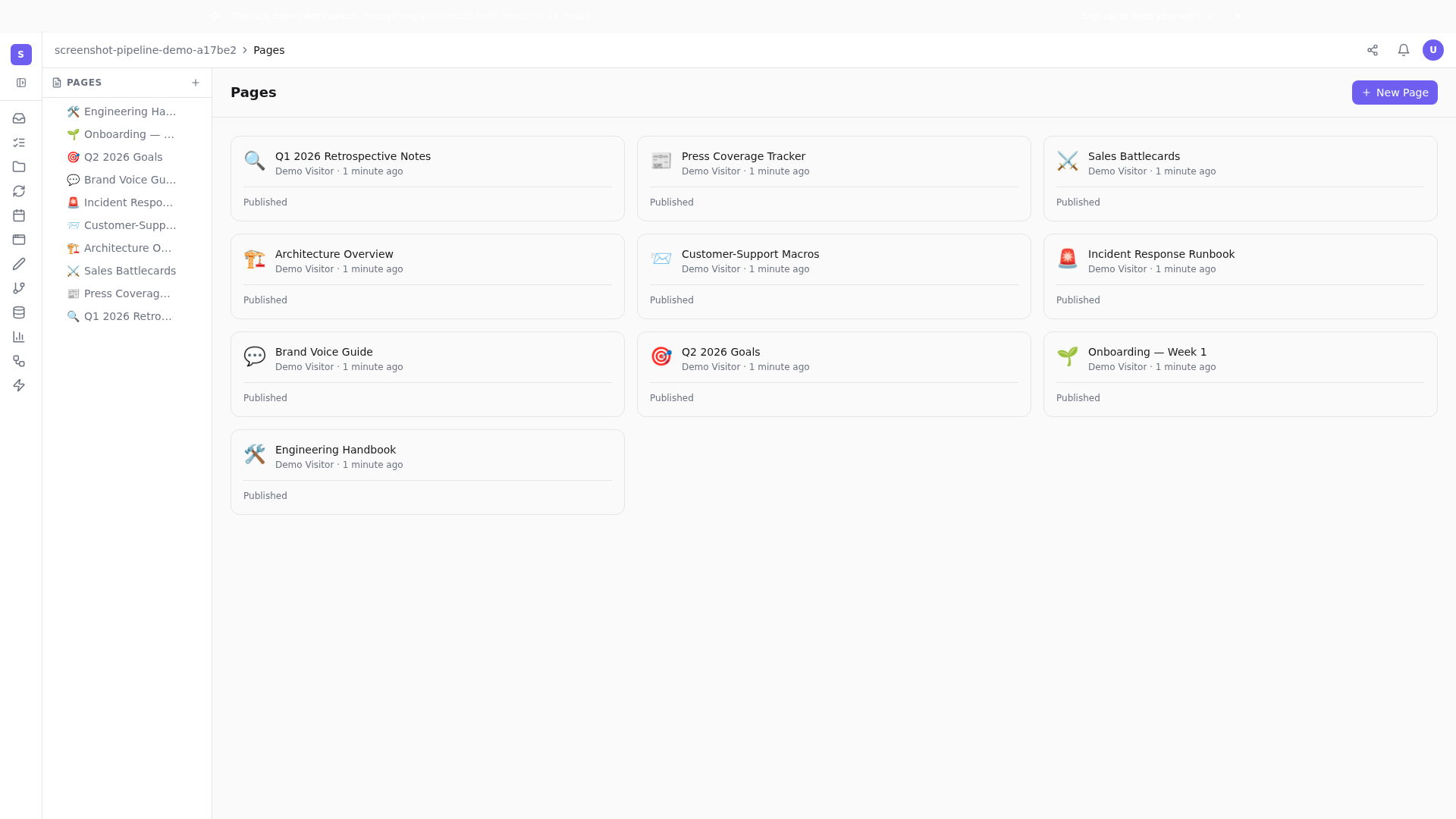
Total time per person: 20 minutes async + 30 minutes sync. Total time without splitting: a 90-minute live retro that produces fewer thoughtful items because people are reacting in real-time rather than writing reflectively. The async time pays back triple.
Part 4 — Handoffs that survive context loss
Three months after a handoff, the most expensive question becomes: 'why was this done?' The original sender has forgotten. The receiver remembers a Slack DM but not the reasoning. Healthy handoffs make the answer survive — the work itself carries the context.
Team Handoffs Without Context Loss
The handoff checklist — who decides, why, acceptance criteria, links.
The handoff template that scales
Every handoff goes through a task with five fields filled in: assignee (one person), description (one paragraph on the why), checklist (3-7 items the receiver ticks as they verify), links (to source docs/decisions), and due date. No assignee in Slack. No description-only-in-a-DM. The task is the handoff vessel; everything else is supplementary.
Part 5 — The 1:1 that actually works
Weekly 1:1s are universally scheduled and universally underutilized. Most are 30 minutes of status update — which the dashboard already shows — followed by 'is there anything else?'. The good 1:1s have a different structure entirely.
The 1:1 structure
- 0-5 min — Status check (only the red items): anything from the dashboard that's red. Skip what's green; the dashboard speaks for itself.
- 5-20 min — Reports' agenda (the most important section): the report drives. They bring 1-3 topics they want to talk about. Manager listens more than talks.
- 20-28 min — Manager's agenda: 1-2 things the manager wants to surface. Coaching, feedback, organizational context, upcoming changes.
- 28-30 min — Close: one explicit action item each. Written in the meeting page.
Two non-obvious rules: skip the 1:1 if both sides agree there's nothing pressing (skipping is healthier than forcing 30 minutes of fake content), and never cancel last-minute (the cancellation tax is high). Reschedule with 48 hours' notice or hold the slot.
Part 6 — The meeting culture audit
Every six months, do a meeting culture audit. Open everyone's calendar (anonymized aggregate) for the previous month. Count the recurring meetings. For each: who attends, what gets decided, what artifact is produced. Three categories emerge: meetings that decide things (keep), meetings that share status (kill — the dashboard does it better), meetings that hash out ideas (keep, but ensure they're triggered, not scheduled).
Team Rituals That Actually Stick
Six team rituals that survive past month two — and three you should stop today.
Part 7 — Remote, hybrid, in-person — when each works
There's no universally right setup. There are setups that fit specific teams' work patterns. Fully remote suits teams that ship code, write docs, and design — work that benefits from long deep-focus blocks. Hybrid suits teams that need both deep work and high-touch collaboration (sales, design crits, founder-led startups). Fully in-person suits teams with apprenticeship dynamics (junior-heavy teams learning by osmosis) or work that needs synchronous physical access (manufacturing, healthcare). Map your team's actual work to the right setup; don't pick the setup first.
The non-negotiables regardless of setup
- Written async standup — works for remote, hybrid, and in-person teams.
- Decisions live in writing — every decision over $1k or with multi-week impact gets written down.
- Dashboards over status meetings — applies universally.
- 1:1s remain weekly — skipping them silently is the strongest predictor of teammate departure.
Part 8 — When to add a meeting
The bar should be high. Three questions: would this be slower as a written thread? Will a decision get made (vs. discussion that loops back)? Does it require synchronous expertise (the live exchange unlocks something)? If you can't answer yes to at least two, don't add the meeting. Send a doc with comments instead.
Closing
Team productivity isn't about working harder. It's about lowering the cost of being a team. The async-first rituals here aren't theoretical — they're the patterns of teams that ship the most while their members work the most reasonable hours. Adopt the rituals and the cost drops. Skip them and you'll find yourselves in meetings forever, wondering why nothing shipped.
A meeting you don't need is the most expensive thing on your calendar.See the demo's team Space with seeded async standup posts and retro pages.
Related posts
Team Productivity: Async Rituals That Don't Drain Anyone
The team productivity playbook that ditches half the meetings. Standups, retros, and handoffs — all running async in Tellzm.
Team Handoffs Without Context Loss
Every Slack DM is a context tax on whoever inherits the work later. Here's how to make handoffs that survive a week.
Team Rituals That Actually Stick
Six rituals you can introduce tomorrow that survive past month two — and three you should stop doing today.
Giving Real Feedback to a Remote Team
Slack is a terrible feedback medium. Written, asynchronous, contextual is the answer.