Team Handoffs Without Context Loss
Every Slack DM is a context tax on whoever inherits the work later. Here's how to make handoffs that survive a week.
If the handoff lives in a DM, it lives nowhere.
The most expensive question in any team is 'why was this done?' asked three months later. Most context loss is preventable — the answer was somewhere, in a DM or a meeting recording, but nobody knows where. Tellzm fixes this by making the task itself the durable handoff vessel.
The handoff checklist
- Who decides next — assign the task, don't @-tag a person.
- Why — write one sentence in the task description. Future-you will need it.
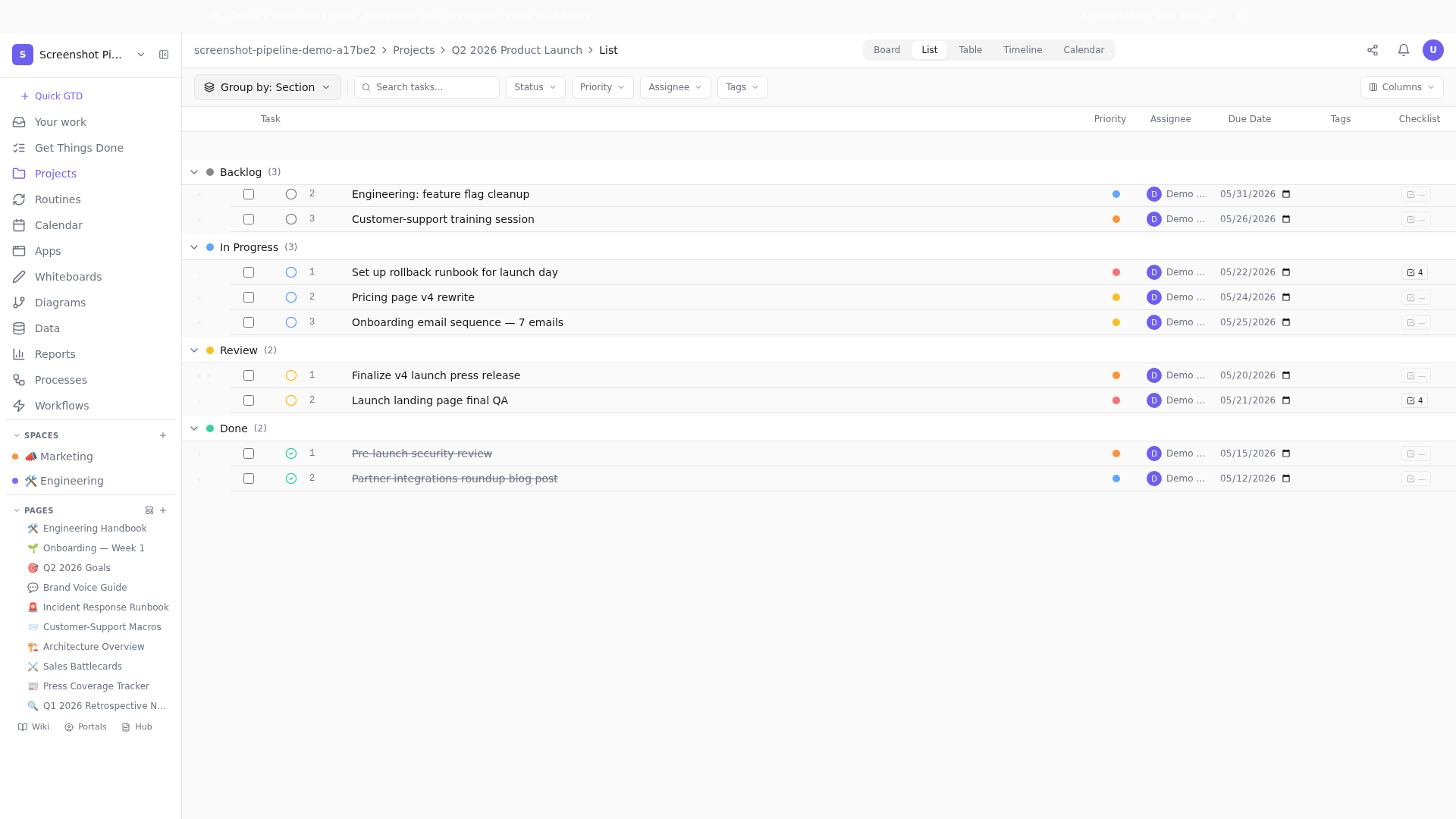
- Acceptance — checklist items the receiver ticks off as they verify.
- Links — to the originating decision, the related project, the spec. No DM screenshots.
When you absolutely must DM
Fine. But before you send the DM, open the task and add a one-line note. The DM is for urgency; the note is for permanence. Both can exist.
Hand off to the task, not to the person. The person changes; the task persists.See how handoffs land cleanly on the demo project board.
Related posts
The Complete Team Productivity Playbook
How to move as one without becoming a meeting factory. A field manual on async-first rituals, handoffs that survive, the meetings that earn their slot, and the team culture that makes everything cheaper.
Team Productivity: Async Rituals That Don't Drain Anyone
The team productivity playbook that ditches half the meetings. Standups, retros, and handoffs — all running async in Tellzm.
Team Rituals That Actually Stick
Six rituals you can introduce tomorrow that survive past month two — and three you should stop doing today.
Giving Real Feedback to a Remote Team
Slack is a terrible feedback medium. Written, asynchronous, contextual is the answer.