Project Management Without the Drift
Most projects don't fail at kickoff. They drift, week by week. Here's how to set up a project in Tellzm so you catch drift before it becomes a slip.
A project's first week predicts its last. Get the structure right early.
Every team has shipped a project that started clean and ended scrambling. The fix isn't more meetings or a fancier Gantt chart. The fix is a project structure where drift is *visible* — where last week's plan and this week's reality sit on the same screen.
What a healthy project looks like
- A PMO document that says, in one place, what we agreed to deliver and what we explicitly didn't.
- Sections that map to the way the work actually flows — not a generic Backlog/Doing/Done.
- Owners on every task. Not a team, not a tag — a person.
- Due dates anchored to milestones, not to vibes.
- A weekly review that compares the plan against the reality — and writes down the delta.
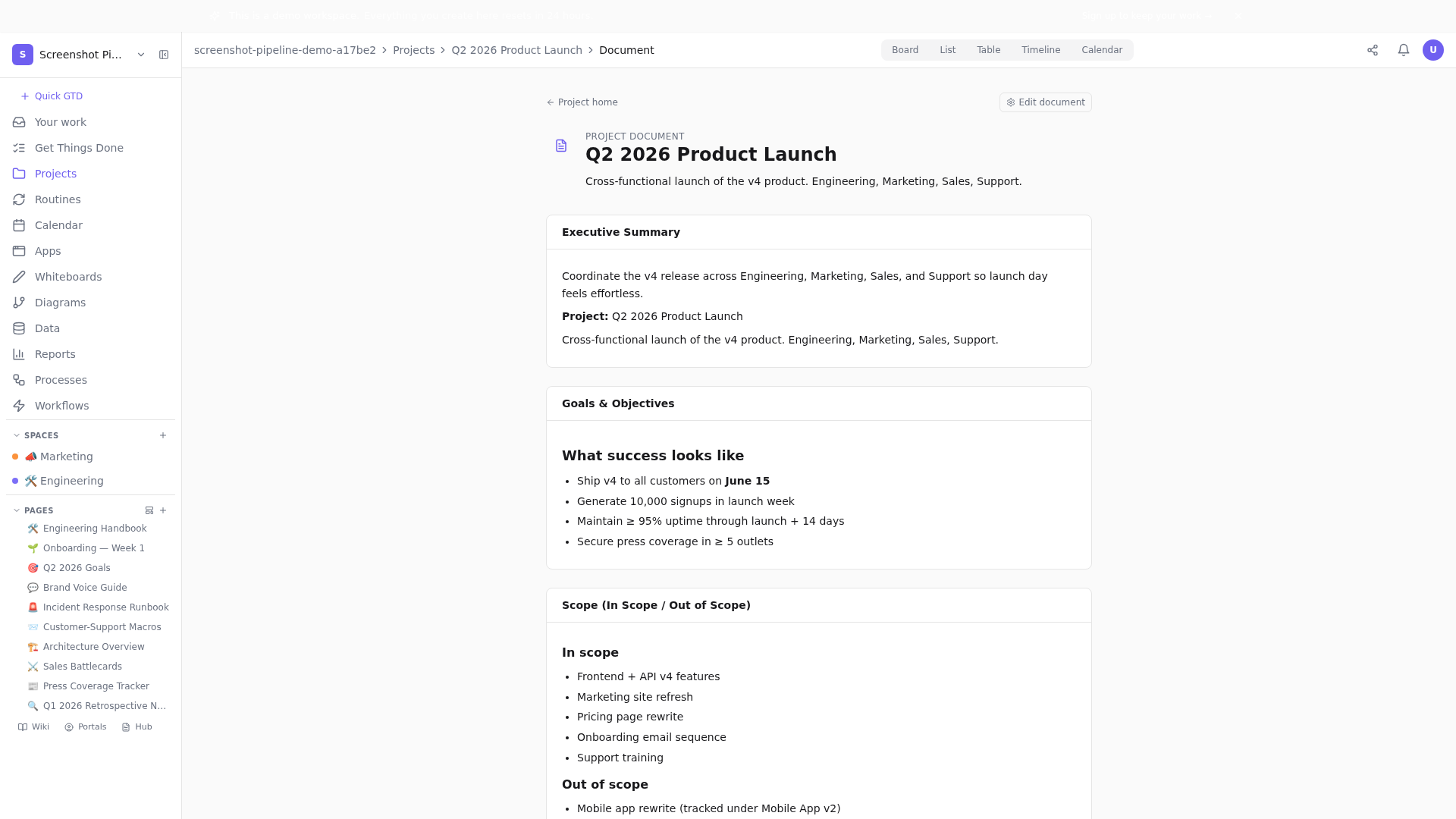
The five-minute kickoff structure
Open a new project in Tellzm and fill in the PMO document first. The 11 sections aren't there to slow you down — they're there to surface decisions that always come up anyway, just usually three weeks later when they're expensive.
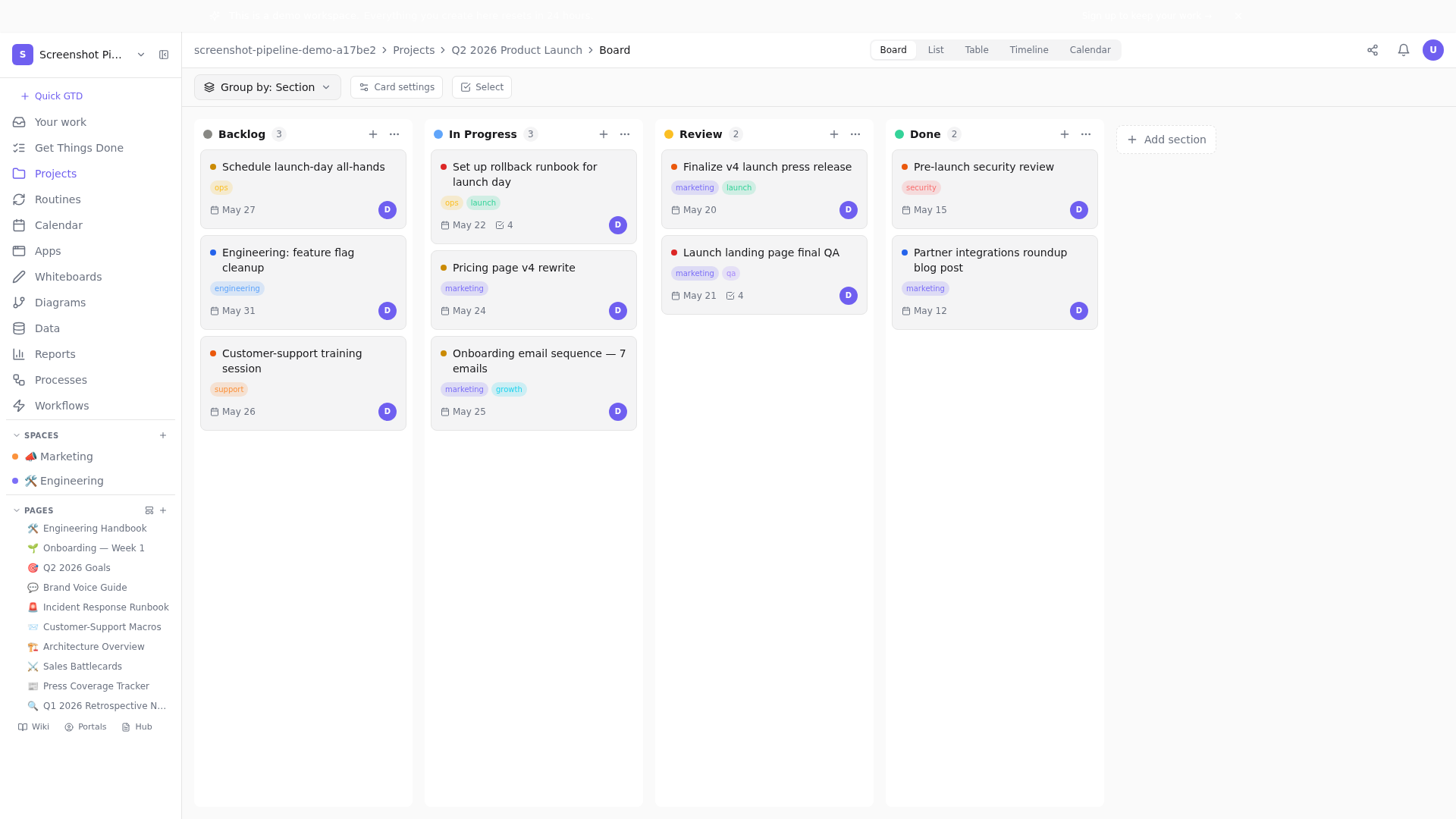
Catching drift early
The leading indicator we trust most: how many tasks have moved this week. A board that looks the same on Monday and Friday is a board where the team got stuck — even if everyone *says* it's going fine.
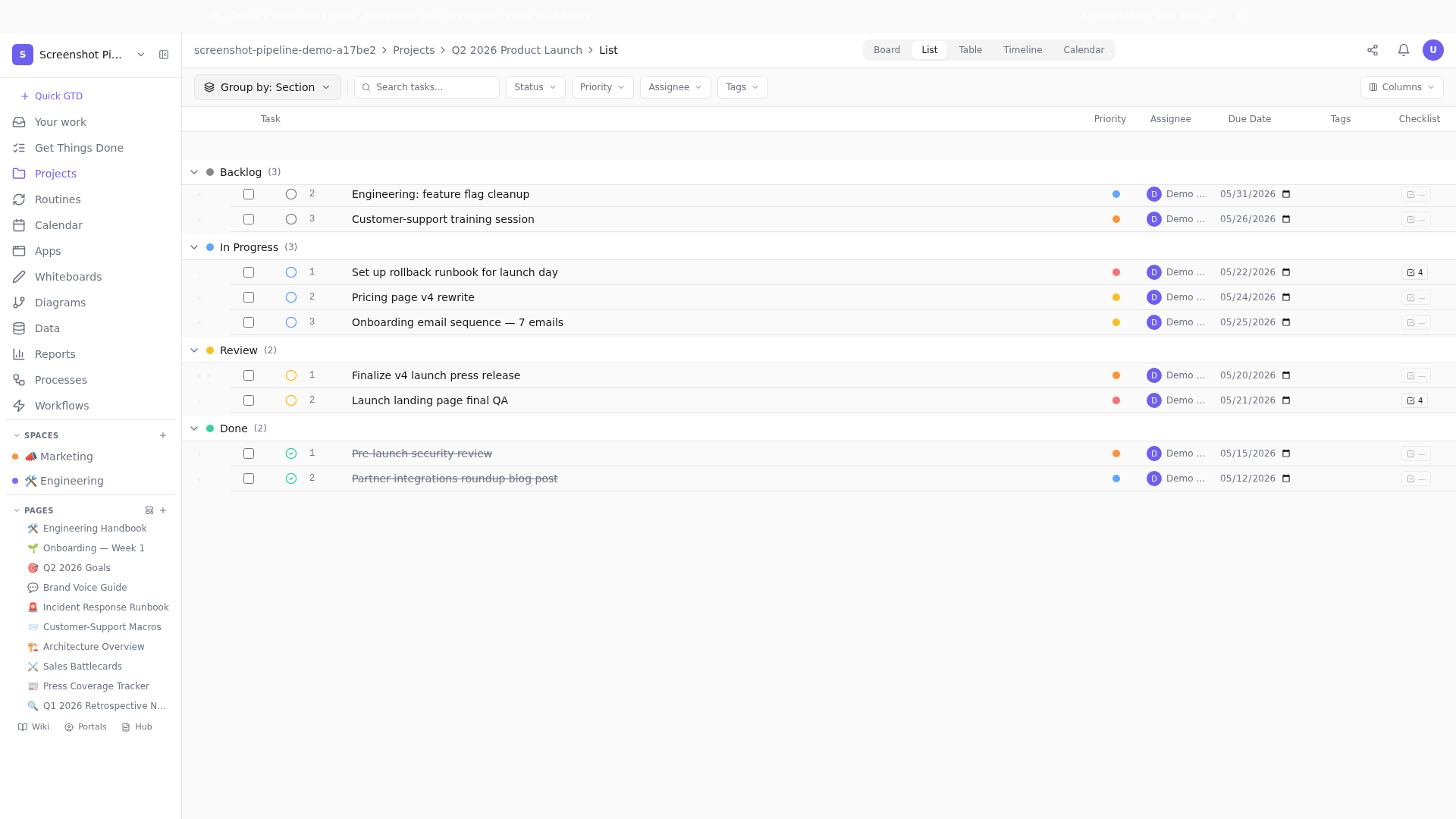
What to do at the weekly review
- Look at the dashboard, not the chat. The numbers don't have a bad week to apologize for.
- For every milestone slipping by more than a week — name the cause out loud.
- Update the PMO doc's risks section in the same meeting. Otherwise it dies.
- Close any task that nobody's worked on in 14 days. If it matters, it'll come back.
A project's first week predicts its last. Get the PMO doc, the owners, and the cadence right early — and the rest mostly takes care of itself.Open a demo workspace and walk through a seeded project end-to-end — no signup needed.
Related posts
The Complete Project Management Playbook
A full-length guide to running projects that don't drift — from kickoff through closeout, with every cadence, artifact, and conversation that actually moves the needle. Drawn from running hundreds of projects in Tellzm.
Stakeholder Management Without the Status Meeting
If you're running a weekly status call because nobody trusts the dashboard, the dashboard is the problem. Here's how to fix it.
The Project Kickoff Meeting Template That Actually Works
Most kickoffs waste the first hour on intros and the second on vague ambitions. Here's a 45-minute structure that ends with everyone knowing what's next.
Scope Creep, the Quiet Killer — and How to Spot It
Scope creep doesn't announce itself. It arrives one tiny 'small ask' at a time. Here's the early-warning system.
Why Every Project Needs a Decision Log
Three months after a project closes, the most expensive question becomes 'why did we choose X?'. A decision log answers it in 30 seconds.